Pool plaster and resurfacing.
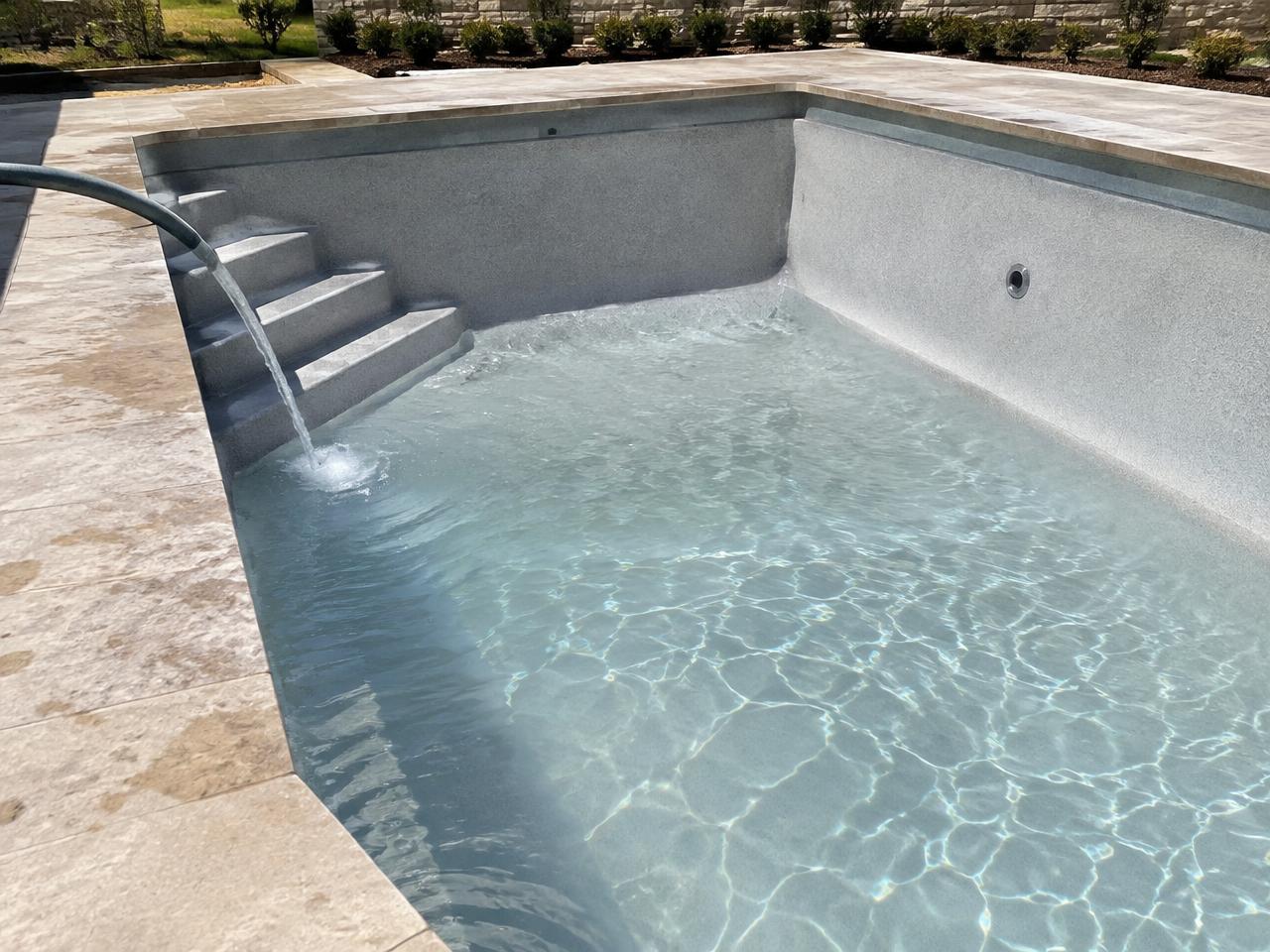
A pool’s interior surface takes constant wear from water chemistry, sun and use. When it starts to fail, resurfacing restores a smooth, watertight finish and refreshes the color of the water.
Considerations
Signs it may be time
- 01
Rough texture
A surface that scrapes feet or snags swimsuits has usually worn past its useful life.
- 02
Staining and discoloration
Stains that don’t respond to normal cleaning or chemistry adjustment often point to a surface that needs renewal.
- 03
Cracks, chips or delamination
Hollow spots, flaking or exposed areas should be looked at before they lead to bigger problems.
- 04
Choosing a finish
Finish color changes how the water reads — lighter for bright blue, darker for deeper tones. We’ll review options and what to expect from each.
Planning around the surface
Because the pool is drained for resurfacing, it’s a natural moment to also look at waterline tile and coping. We’ll let you know if anything else should be addressed while the pool is empty.
Questions
Common homeowner questions
Does resurfacing change the water color?
Do I need to replace tile at the same time?
What should I send for an estimate?
Estimates · Dallas–Fort Worth
Tell us about your project.
Share your property location and the work you’re considering. Send an estimate request to Cool & Clear Pools for review.